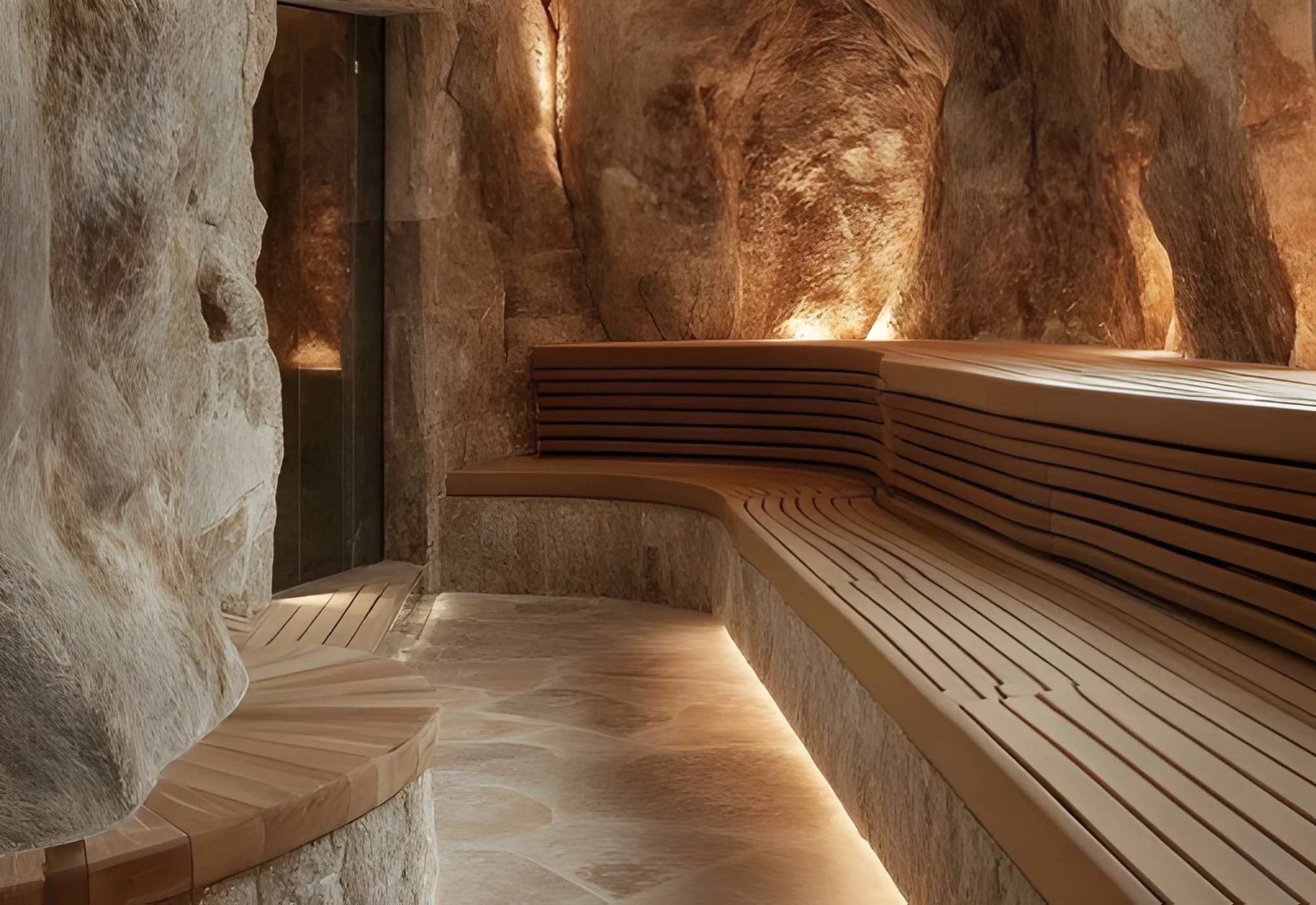
There is something that happens in a traditional sauna that is difficult to explain to someone who has never experienced it.
Not the heat itself — though that is considerable. Not the physical effects, though those are real. It is something more than either of those things. A kind of enforced arrival. The noise of the day does not follow you in. The phone stays outside. The body takes over from the mind, because in that heat the body is impossible to ignore. You are present, fully and without choice, in a way that almost nothing else in modern life requires.
We have both known this for years. It is one of the reasons a traditional Finnish sauna sits at the heart of what we are building.
Two thousand years of knowing
The sauna is one of the oldest wellness practices in the world. Finnish sauna culture is thought to be at least two thousand years old — and at its peak the sauna was where babies were born, where the sick were tended, where the dead were prepared. It was a place of threshold and restoration. The space between the ordinary world and something quieter and more essential.
That is not superstition. It is the accumulated wisdom of generations who understood, without needing clinical language to describe it, that controlled exposure to intense heat did something profound and necessary for the human body.
Modern research has spent the last several decades catching up with what they already knew.
A long-term Finnish study following over two thousand men across more than twenty years found that those who used a sauna four to seven times per week had dramatically reduced risk of cardiovascular disease, fatal cardiac events, and all-cause mortality. The researchers described the magnitude of the effect as comparable to that of regular aerobic exercise.
This is serious, longitudinal research confirming what generations of Finnish people built into the fabric of their daily lives long before anyone had the tools to measure it. That pattern — ancient practice preceding scientific validation by centuries — is one we find deeply compelling. It suggests that the body has always known what it needs. That human beings, when they lived closer to natural rhythms and their own physical experience, made choices that were wiser than they perhaps understood.
The sauna is one of those choices.
Traditional versus infrared
The sauna conversation has been complicated in recent years by the rise of infrared options, which operate at much lower temperatures by warming the body directly rather than heating the surrounding air.
They have genuine benefits and are more accessible for those who find high heat difficult. But they are not the same experience, and the research base is not equivalent. The significant cardiovascular response, the hormonal cascade, the heat shock protein activation that supports cellular repair — these are largely driven by the intensity of temperature that only traditional heat produces. The studies that have generated the most compelling long-term health data have almost exclusively used traditional Finnish sauna protocols.
There is also something less quantifiable but impossible to dismiss. The traditional sauna demands more of you. It requires you to breathe deliberately, to be present, to listen to your body’s signals about when to stay and when to leave. In that demand is a teaching that runs through everything we believe: that the body is intelligent, that it communicates, and that learning to hear it changes everything.
The ritual matters as much as the biology
In traditional Finnish practice, the sauna is not a quick intervention. It is a ritual. You arrive without hurry. You allow the body to warm gradually. You leave and cool — in cold water or fresh air — and return. The cycle of heat and cooling, repeated two or three times, is where much of the physiological benefit is generated and where the psychological shift becomes most profound.
This is what we mean when we talk about straddling the science and the spiritual. The most powerful practices — the ones that have endured across cultures and centuries because they genuinely work — tend to operate on both registers at once.
The traditional sauna is one of them.
It is not a luxury. It is not a trend. It is a two-thousand-year-old practice that modern research has confirmed, and that we are proud to place at the centre of Sanctuary.
Cora and James
Sanctuary Penarth