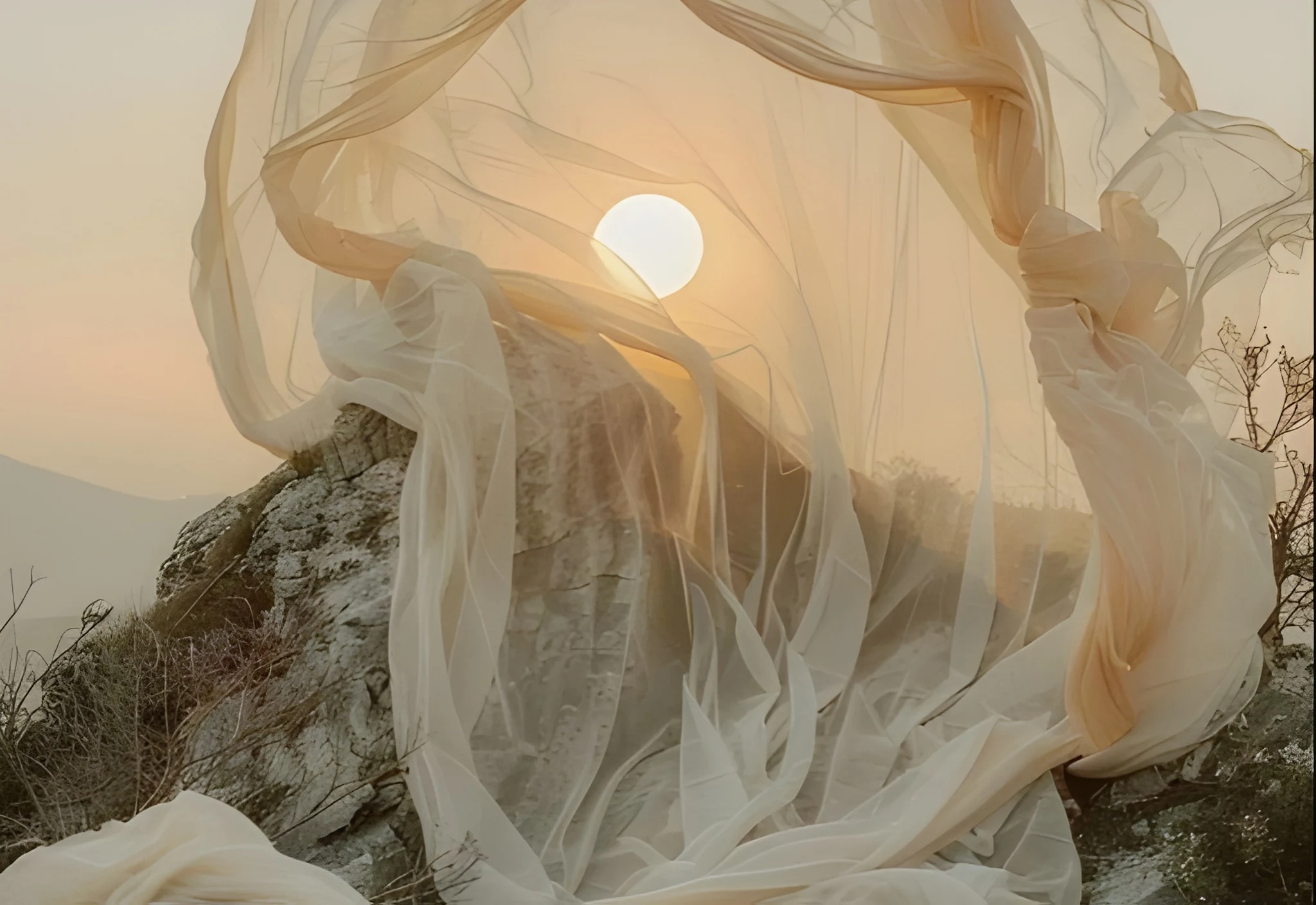
Somewhere along the way, menopause became just something for a woman to survive.
Not a passage. Not a threshold. Not one of the most significant biological and psychological transitions a woman will move through in her lifetime. Just a difficult period — of symptoms to manage, discomfort to endure, and hormones to somehow restore to something closer to normal — before life could resume.
Most women arrive at perimenopause entirely unprepared for what it actually involves. Not because they have not done their research. But because everything they have been told has been filtered through a single, limiting lens — the lens of deficit. Declining hormones. Diminishing vitality. A body that is losing something it will not get back.
That narrative is not just incomplete. It is doing enormous harm to the women who internalise it.
What the mainstream gets wrong
The medical establishment, at its least helpful, treats menopause as a deficiency disease — something has gone wrong, and the goal is to restore what has been lost. The wellness industry sells symptom relief. Even the most well-meaning support tends to operate from the same assumption: menopause is a problem, and the woman going through it needs help getting through it as smoothly as possible. Her only hope is to get through it as best she can.
We do not argue against medical support where it is needed and wanted. Informed choices around hormone therapy and other interventions are part of a woman’s full toolkit and deserve to be taken seriously. But medical management alone — without the deeper context of what this transition actually is — leaves women with their symptoms addressed and their transformation entirely unexplored and unexperienced. Something powerful is being lost.
And it is the transformation that changes everything.
The rage that arrives in perimenopause is not a symptom. It is clarity — the accumulated weight of every compromise, every self-abandonment, every time a woman made herself smaller to keep the peace, finally refusing to be silent. The grief is real and it deserves to be honoured — something genuine is ending, and genuine endings require genuine mourning. The disorientation is the necessary confusion of a woman whose familiar identity is falling away before the new one has fully formed.
None of this is the widely touted decline. All of it, navigated intentionally and consciously, is the beginning of something extraordinary.
A different understanding
The body is not malfunctioning during menopause. It is evolving. The hormonal shift is not the body losing something — it is the body changing its orientation. Moving, quite literally, from a physiology that has been organised around the nurturing of others, towards one that is finally available to the woman herself.
In almost every traditional culture in human history, the post-reproductive woman was understood to be moving into her power — not out of it. The wisdom, the discernment, the freedom from the biological and social imperatives that had governed her earlier decades — these were recognised as gifts rather than losses. As elevation rather than decline.
Modern western culture is almost uniquely positioned to have lost this understanding entirely. We have medicalised a rite of passage. We have pathologised a threshold. And in doing so, we have left generations of women navigating one of the most significant passages of their lives with the wrong map entirely.
What I have found — and this is the consistent finding of many years of work with women in big transitions — is that the women who come through menopause most transformed are not the ones who managed their symptoms most effectively. They are the ones who understood what was happening deeply enough to lean into it rather than fight it. Who allowed the unravelling. Who found, in the loss of who they were, the beginning of who they were always meant to become.
What lived experience adds
I want to be honest here, because authority in this area means very little without it.
I have navigated my own menopause. I know the territory from the inside — the heat in the early hours, the dread without a name, the morning I looked in the mirror and did not recognise the woman looking back. The body that brought me to my knees. The grief and the rage and the disorientation of familiar parts of myself falling away with nothing yet in their place.
I also know what is on the other side of it. A woman who is quieter, deeply confident in a way that is hard to sufficiently describe, more honest and more deeply rooted in her own knowing than the woman who entered it. A relationship with my own body — a level of intimacy and genuine love — that was simply not available to me before.
That personal navigation, alongside over twenty-five years of coaching more than a thousand women through the full landscape of their wellbeing, is what I bring to this conversation. Not a theoretical framework. Not a symptom management protocol. But a lived, tested, deepened understanding of what becomes possible when a woman is supported to go through menopause rather than around it. I wrote The Great Surrender — a guide to this exact journey — because I could not find the book I needed when I was in the middle of it. It is available to download free, and if any of this resonates, it is written for you.
What this has to do with Sanctuary
The philosophy that underpins Sanctuary — that the body is intelligent, that it communicates, that working with it rather than against it changes everything — applies nowhere more profoundly than in this transition.
A woman in perimenopause or menopause is not a woman whose body is failing or going wrong. She is a woman whose body is speaking with unusual urgency about what it needs. Space. Restoration. Movement that genuinely nourishes rather than depletes.
At Sanctuary, the conversation about menopause is not a niche add-on. It is woven into the founding philosophy of the space — the understanding that whole-person wellbeing means honouring every season of a woman’s life, including and especially the ones that ask the most of her. For members who want to go deeper, specialist coaching and dedicated workshops will be available to support this passage with the seriousness and the care it deserves.
Menopause is not a problem to be managed. It is a passage to be honoured.
And on the other side of it — if you are willing to go through it rather than around it — is a woman you have not yet fully met.
I promise you, she is worth the journey.
Cora
Sanctuary Penarth
If this piece has spoken to something in you, The Great Surrender — Cora’s guide to navigating this passage with honesty and intention — is available to download free at coradarlington.com