There is a question I have returned to more times than I can count, across more than two decades of sitting with women in the most significant passages of their lives.
Do you believe your life is happening to you — or for you?
It sounds simple. It is not simple at all.
The two positions
In my experience, there are ultimately only two positions a human being can occupy in relation to their own life. The first is the position of the victim — not in the dramatic sense of the word, but in the most ordinary, pervasive, culturally reinforced sense.
The belief, often entirely unconscious, that life is something that occurs to us. That we are the recipients of circumstances, of other people’s choices, of luck good or bad. That we are, at some fundamental level, at the mercy of forces outside ourselves.
The second position is that of the creator. The understanding — again, often arrived at gradually rather than all at once — that while we cannot control everything that happens, we have profound influence over how we interpret it, how we respond to it, and what we choose to do next. That we are not the passive receivers of our experience but the active, engaged, imperfect shapers of it.
One of these positions will set you free.
The other will keep you in a kind of bondage that is all the more difficult to name because it so often looks and feels like simply being realistic.
The clay and the wheel
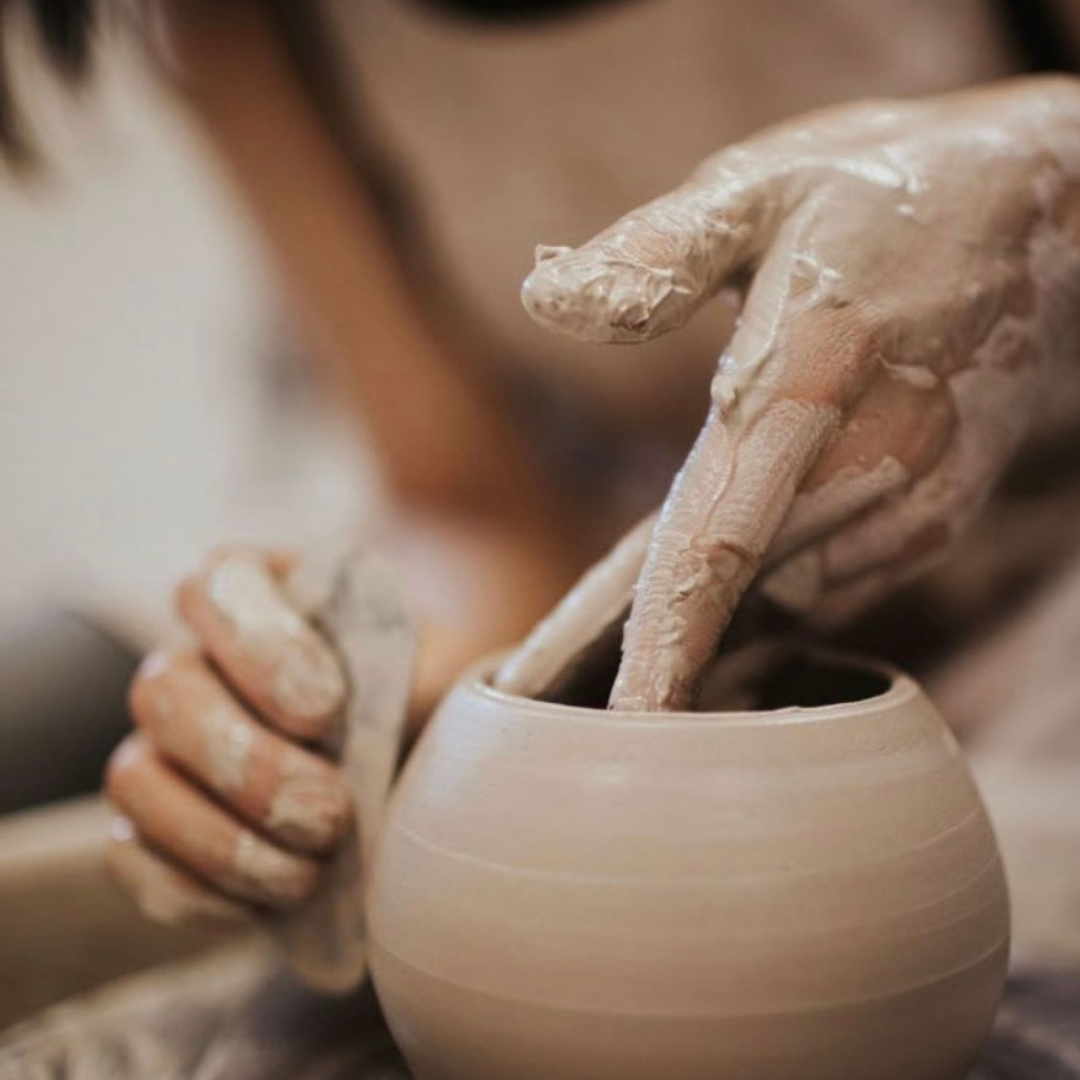
I keep coming back to this image — hands in clay. The potter at the wheel. The raw, unformed material that is responsive to pressure, to attention, to the quality of presence brought to the work.
Your life is the clay.
It is not fixed. It is not finished. It is not beyond shaping — even now, even here, even with everything that has already occurred.
The shape it takes is profoundly influenced by the quality of attention you bring to it. By the thoughts you choose to examine rather than simply believe.
By the patterns you are willing to interrupt. By the story you tell yourself about who you are and what is possible for you.
This does not mean that everything is your fault. It does not mean that difficulty is not real, that systemic barriers do not exist, that grief and loss and hardship are simply matters of perspective. They are not.
What it means is that you have more agency than the victim position allows you to believe. And claiming that agency — really claiming it, in the body and not just as an intellectual concept — is one of the most profoundly transformative things a human being can do.
How perspective creates reality
The research on this is not soft or anecdotal. The way we interpret our experience — our explanatory style, as psychologists call it — has measurable consequences for our health, our relationships, our resilience, and our capacity to grow.
People who interpret adversity as permanent, pervasive, and personal (“this always happens to me, it affects everything, and it is because of who I am”) are significantly more vulnerable to depression, anxiety, and learned helplessness than those who interpret the same adversity as temporary, specific, and external (“this happened, it affects this area of my life, and it is something I can respond to”).
Same event. Entirely different experience. Because of perspective.
This is not toxic positivity. It is not the instruction to simply think happy thoughts and everything will be fine. It is the recognition that the lens through which we see our lives is not fixed — and that changing it is genuine, serious, evidence-based work.
What this looks like in practice
In over twenty-five years of coaching women through every kind of transition — burnout, midlife, menopause, relationship endings, career crossroads, the quiet erosion of self that comes from years of putting everyone else first — the shift from victim to creator is almost always where the real work begins.
Not through force. Not through toxic positivity or manufactured gratitude. But through the slow, careful, honest practice of asking better questions.
Not “why does this keep happening to me?” but “what is this asking of me?”
Not “I cannot change this” but “what is within my influence here?”
Not “this is just who I am” but “is this who I choose to be?”
These questions are simple and they are not easy. They require a quality of honesty that most of us are never asked for. And they require the kind of support — the right questions, the safe space, the person who can hold both the challenge and the belief in your capacity — that is genuinely hard to find.
At Sanctuary
This philosophy is woven into everything we do at Sanctuary Club Penarth. It lives in our coaching programmes, in the conversations our practitioners hold, in the way we have designed the space and the community.
Because we believe that the most important work a person can do is the work of becoming more fully themselves. Not a better version of someone else’s life.
Their own life — shaped by their own hands, aligned with their own values, moving in the direction of their own becoming.
If you are ready to take your hands off the edge of the wheel and put them into the clay — we are here for it.
Coaching programmes at Sanctuary are available to members.
Co-Founder & Head Coach